AUDIO QUACK
Skip Introduction | 3:13
Today, I feel like a lethargic, PMS-ing slug sliding along a hot pavement. Each sentence feels like a math equation. I called my Mum ten minutes ago, telling her I wanted to hide in a cupboard. And she laughed and said, “Well, go hide in the cupboard then. Ha. Ha. Ha.”

It wasn’t the right answer. No, I, a millennial, am used to being pumped up by motivational quotes. I wanted to hear something wonderfully cliché like, “Well, Mary, life begins at the end of your comfort zone.” Or “You are not what you do, not what you say you’ll do.” Or “Nothing is scarier than avoiding your full potential.”
Our parents only had the Eye of the Tiger, but we have motivational speakers, quotes, positivity journals, self-improvement books, and inspirational podcasts to drive us to succeed in our goals. Even if that goal is to write your comedy blog for a select number of readers. (Thanks for reading).
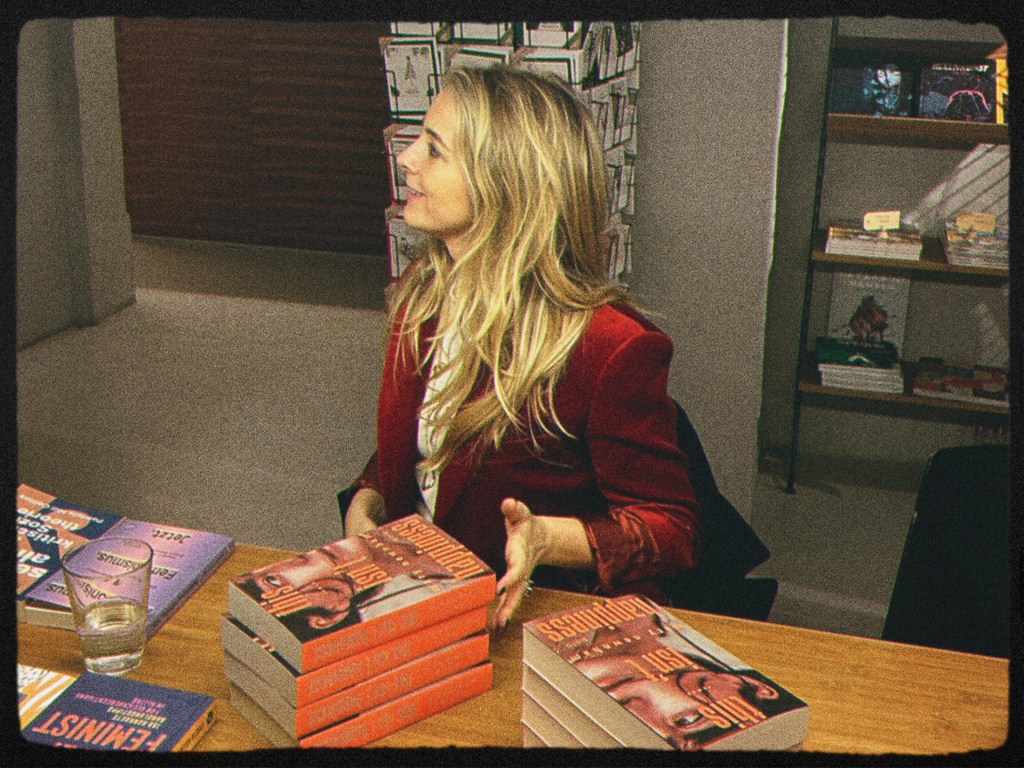
On Saturday night, I saw a live recording of How to Fail – a podcast hosted by the elegant Elizabeth Day. The podcast celebrates failure, with Day asking her guests to explore three of their personal failures.
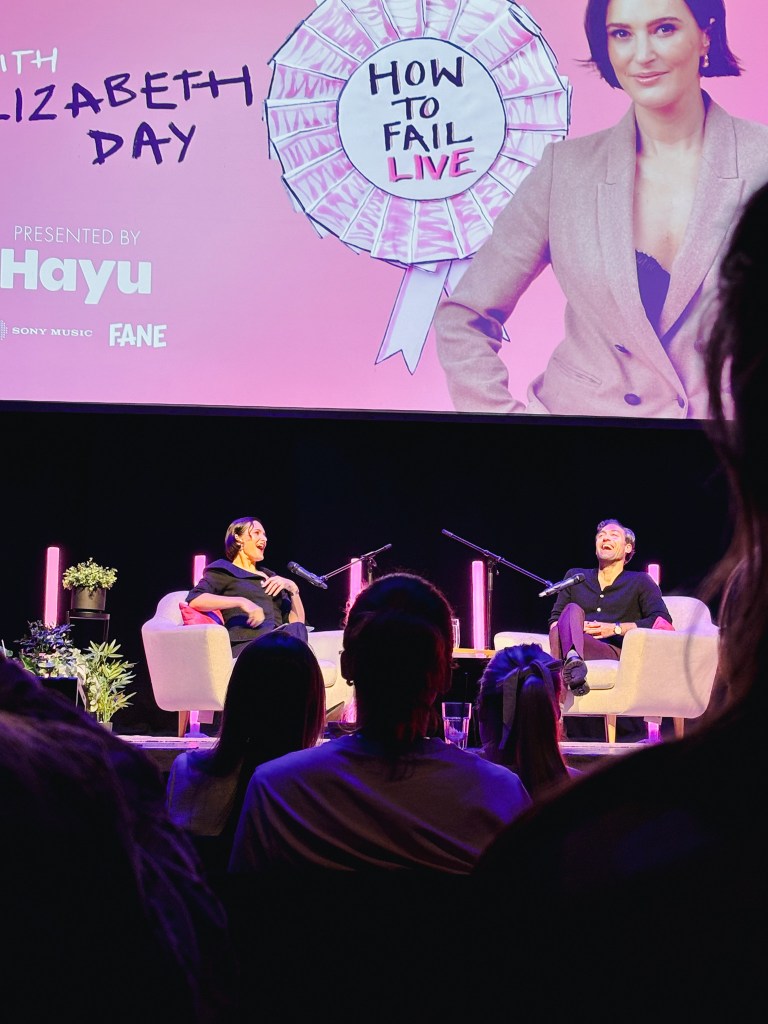
Her guest was Alex Hassell, who played the sex icon Rupert Campbell-Black in Jilly Cooper’s Rivals. Hassell opened up about his insecurities that can be traced back to being bullied at school. He talked about the uphill climb to success and his doubts about pulling off the role of the iconic playboy, Rupert. (You can pull it off, bud).

We lap this stuff up. We want to hear about the struggles, the rejections, the sleepless nights, sweaty palms, and raging butterflies. It makes them human; therefore, their successes are attainable. How motivating! It’s no wonder the How to Fail podcast has had 50 million downloads since its launch in 2018.
Interviews with extraordinary people, like in How to Fail, are one of the many resources we can use on our journey of self-improvement. And it appears a lot of us are on that journey. In 2023, the industry was worth USD 41 billion and is predicted to grow to around 81 billion by 2032.
I went through my self-improvement stage when I was living in Australia. I began to work with a real estate entrepreneur who had been inspired by the king of motivational speakers—Tony Robbins.
For those who have never heard of Mr. Robbins – he is a gigantic man with a gravelly voice worth around $600 million. He asks questions like, “Do you have a hunger to increase the quality of your life?” (AAAAH, I DON’T KNOW).
A ticket to his 6-day transformation event, Date with Destiny, costs upwards of $4,400.
He’s not my vibe, but he has done wonders for others, including Serena Williams and my former boss.

I was hired to produce a podcast where my boss would interview local entrepreneurs about overcoming their struggles. I enjoyed this job very much. Nobody was famous, just hard-working people with meaningful stories. We had a beautician whose salon burned down, and she had to rebuild her business from scratch. And a man who set up an ethical denim company (Outland Denim) to help survivors of human trafficking in Asia. It was uplifting. (Apart from the day I accidentally deleted an hour-long interview. That wasn’t so uplifting.)

Despite making a motivational podcast, I had lost my own UMPH. I was having my quarter-life crisis, which consisted of eating lots of Açaí, trying to meditate, and Googling things like ‘How to squat with a barbell.’
All great stuff – but not me.
Like reaching for a diet book when you’re unsatisfied with your body, I leaned into self-help because I was frustrated with my personality. I was shyer than ever and no longer felt like I could do anything remarkable. My social life was pretty much non-existent, and I couldn’t squat with a barbell. I hoped that by listening to confident people and learning techniques, I would find my UMPH again.

When I wasn’t editing ‘Ummms’ out of interviews, I was helping my then-boyfriend grow his real estate business. Part of that was ‘letterbox drops.’ I’d walk the hills of Brisbane under the hot-hot sun, slipping leaflets into letterboxes to make the locals aware of how much their neighbour’s house sold for.
I decided to use the time to do some self-improvement work. Two birds and all that. I’d listened to various podcasts. Unf*ck Your Brain, hosted by a feminist coach. The Rich Roll Podcast. Roll was a recovered drug addict who became an ultra-endurance athlete. The Tim Ferriss Show. Tim Ferriss was the man behind the 4-Hour Work Week. And, of course, there were TED Talks. So many TED Talks. So many leaflets.
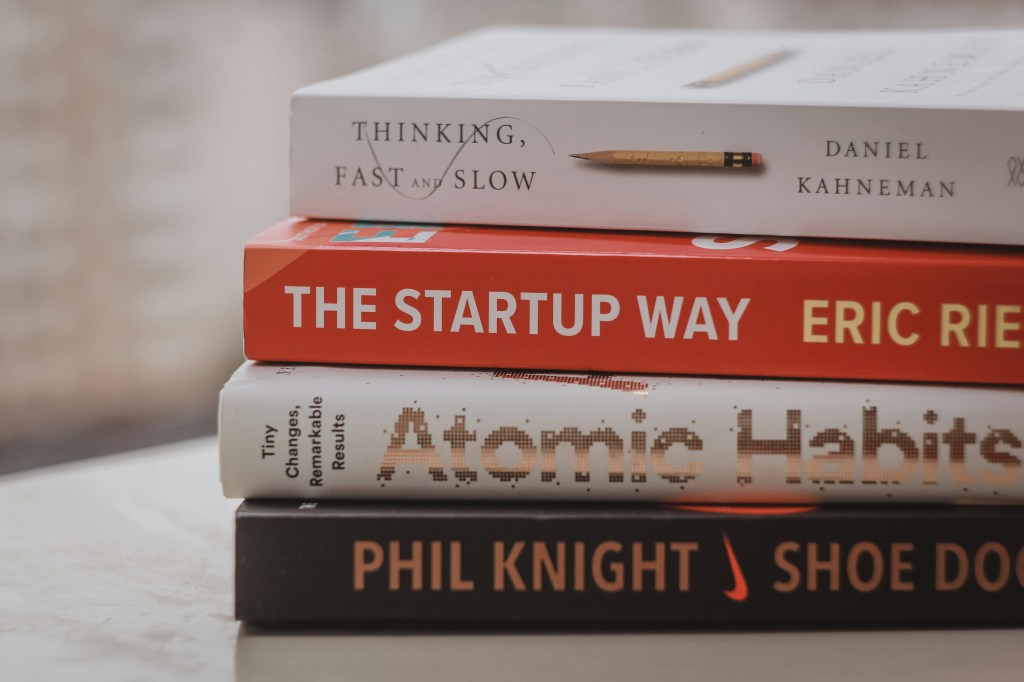
I got into the books as well. The 5-Second Rule told me that if I wanted to make myself do something, I should count down from five, as this would launch me into action.
5.4.3.2.1… Press Send.
5.4.3.2.1… Get out of bed.
5.4.3.2.1… “Steven, we need to break up.”
At one point, I was writing three positive thoughts a day. And yes, I listened to Eye of the Tiger ….a lot.

As I drifted into my late twenties (and back home to England), I eased off the self-improvement work and began focusing on building knowledge instead. For me, Anna Karenina was more effective than studying The Subtle Art of Not Giving a F***. It meant I could say things like, “Alex Hassell would make an excellent Vronsky.“
My friend Lettuce was talking. She owns a boutique clothing line and confessed how she got distracted by ‘how to hustle’ books. She soon recognized that she was better off spending her time learning about marketing strategies and researching suppliers instead.
As Francis Bacon said, “Knowledge itself is power.”
Still, there are sluggish days when you just need a bit of motivation. You can use an obscure technique you learned in a book or listen to Kate Winslet talk about her work ethic on How to Fail. Even a cheesy quote can help… Mum.
Before you know it, you’ve done what you’ve set out to do.
5.4.3.2.1…Publish.
Follow Me on Instagram @marynewnhamwrites


 THE QUACK